When a patient hears the diagnosis “torn meniscus,” the first question is almost always the same: do you need surgery for a torn meniscus? The honest answer is that there’s no single yes or no that applies to every patient. It depends on exactly where the tear is located, what type of tear it is, and – just as importantly – what the patient wants to keep doing, whether that’s daily activity or competitive sport.
As an Orthopedic Surgeon with a specialization in Sports Medicine, Dr. Papadopoulos approaches every case individually, weighing the anatomy of the injury against the patient’s activity level.
Not All Tears Are the Same – Why the Zone Matters
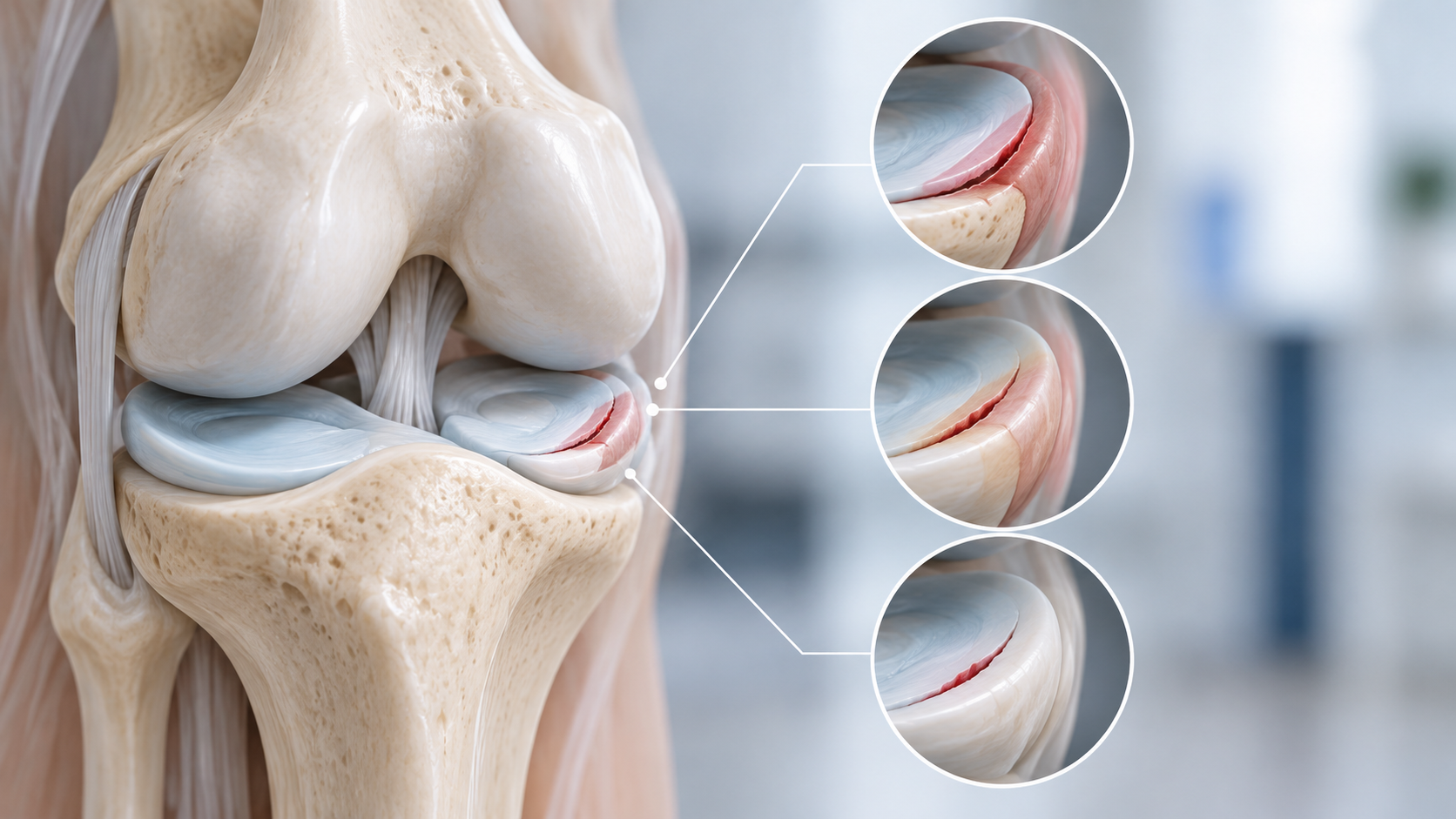
The meniscus isn’t equally supplied with blood throughout its structure, and that’s the first thing evaluated before any treatment is proposed.
- Red-red zone: the outer, well-vascularized part of the meniscus. Tears here have a genuine biological capacity to heal — either on their own or after arthroscopic repair.
- Red-white zone: intermediate blood supply. Healing is possible but less certain, and the decision is often individualized.
- White-white zone: the inner, essentially avascular part. Spontaneous healing here is unlikely, regardless of treatment.
When a Meniscus Tear Can Heal Without Surgery
In a number of cases – particularly tears in the vascularized zone, smaller tears, or patients with lower functional demands – the first approach is conservative:
- Targeted physical therapy to strengthen the muscles around the knee (quadriceps, hamstrings)
- Temporary activity modification, avoiding twisting or deep-flexion movements
After roughly 6-8 weeks of conservative treatment, progress is reassessed. If pain and function are improving steadily, treatment continues without surgery; if not, surgery is considered.
Meniscus Tear Treatment Options: Repair vs. Removal
When surgery is necessary, the choice isn’t automatically “removal.” In the vascularized zone, arthroscopic repair is preferred whenever technically feasible over partial meniscectomy, via knee arthroscopy, preserving as much healthy tissue as possible. This approach is associated with better long-term protection of the knee’s articular cartilage and a reduced risk of early-onset arthritis.
Meniscectomy remains the appropriate choice when the tear is in the avascular zone or has a complex, non-repairable pattern.
Recovery time varies significantly depending on the treatment chosen:
| Treatment | Typical Recovery Time |
|---|---|
| Conservative treatment |
4-8 weeks
|
| Arthroscopic meniscectomy |
2-6 weeks
for daily activities
|
| Arthroscopic repair |
4-6 months
due to the protected healing period for tissue recovery
|
The recovery times above are indicative and vary by patient, depending on the extent of the injury and adherence to the rehabilitation program.
Αθλητής vs Μη-Αθλητής – Διαφορετική προσέγγιση
Athlete vs. Non-Athlete – A Different Decision
The same tear can lead to a different decision depending on who has it. An active athlete looking to return to demanding activity often needs more immediate, comprehensive treatment through the lens of Sports Medicine , to avoid secondary damage from knee instability. In someone with a more sedentary lifestyle, on the other hand, the conservative route can be entirely sufficient long-term.
Frequently Asked Questions
Does a torn meniscus need surgery?
Not always. It depends on the tear’s location (zone), size, and the patient’s activity level.
Can I walk with a torn meniscus?
In most cases, yes – walking on flat ground usually doesn’t worsen the injury. However, a sensation of the knee “locking” or feeling unstable calls for prompt evaluation.
How dangerous is it to skip surgery?
If the tear is in a zone with healing potential and conservative treatment is working, there’s no increased risk. Risk increases when persistent knee “locking” is ignored over time, which can progressively damage the articular cartilage.