

Shoulder replacement – shoulder arthroplasty – replaces the damaged surfaces of the joint with implants, relieving pain that no longer responds to any other treatment and restoring function to a shoulder that has become difficult to live with.
It is one of the most technically demanding operations in orthopaedic surgery, and one where planning and surgeon experience translate directly into the result.
Panagiotis Papadopoulos MD, MSc, orthopaedic surgeon specialising in shoulder and knee surgery, performs shoulder arthroplasty at the HYGEIA Hospital in Marousi, with consultations at his private practice in Glyfada and at HYGEIA.
Contents
When Is Shoulder Replacement Needed?
Shoulder replacement is considered for four main conditions:
End-stage arthritis – osteoarthritis, rheumatoid arthritis or post-traumatic arthritis. The articular cartilage that allows the bones to glide smoothly becomes progressively rough and irregular until movement itself causes pain.
Patients describe difficulty with the simplest daily actions: eating, combing their hair, lifting anything, any manual work.
Rotator cuff arthropathy – cartilage destruction combined with tearing of the tendons surrounding the joint. The patient has pain from the arthritis and weakness from the failed cuff at the same time. Where the tear is no longer repairable, arthroscopic repair is not an option and replacement is the appropriate operation.
Complex fractures of the humeral head in older patients, where the fracture cannot be reconstructed with plates or nails, particularly when arthritis or cuff deficiency was already present before the injury.
Osteonecrosis of the humeral head – loss of blood supply leading to progressive collapse of the bone, with severe pain and loss of movement.
The decision to operate. Surgery is indicated when symptoms have become constant rather than intermittent, when pain intensifies at night and does not settle, when physiotherapy, anti-inflammatory medication and injections have been tried and failed, and when the loss of movement is limiting daily life in a way the patient is no longer willing to accept.
Types of Shoulder Arthroplasty
Choosing the right type of implant matters as much as the surgery itself, and depends on the condition of the cartilage, the state of the rotator cuff, the quality of the bone and the age of the patient.

Reverse Total Shoulder Arthroplasty
The reverse prosthesis has gained ground significantly in recent years, and for good reason. It reverses the ball-and-socket configuration of the joint, allowing the deltoid muscle to take over the work normally done by the rotator cuff. This means the outcome does not depend on the condition of the cuff tendons — which is precisely why it succeeds where other options cannot.
It is the operation of choice for arthritis combined with an irreparable rotator cuff tear, for cuff tear arthropathy, and for severely comminuted and displaced fractures of the humeral head.
Anatomic Total Shoulder Arthroplasty
Both damaged surfaces are replaced – the worn glenoid socket and the humeral head – reproducing the natural anatomy of the joint. It applies to specific patterns of surface damage and, unlike the reverse prosthesis, it depends on the rotator cuff being intact and functioning well. Where the cuff is sound, it gives excellent movement and durable pain relief.
Stemless Shoulder Replacement
A modern technique that avoids the traditional long stem, fixing the implant directly to the metaphyseal bone. It is particularly suited to younger patients, and offers three advantages: more of the patient’s own bone is preserved for any future revision, surgical trauma is reduced and recovery is faster, and the risk of periprosthetic fracture is lower.
Hemiarthroplasty
Only the humeral side of the joint is replaced, leaving the socket intact. It applies to fractures where the rotator cuff is undamaged.
It is worth being direct about this option: hemiarthroplasty is the subject of considerable debate within the international shoulder surgery community, because of the range of complications that can develop post-operatively. It is offered here only where it is genuinely the right answer, and the reasoning will be explained to you.
Pre-Operative Planning and Technology
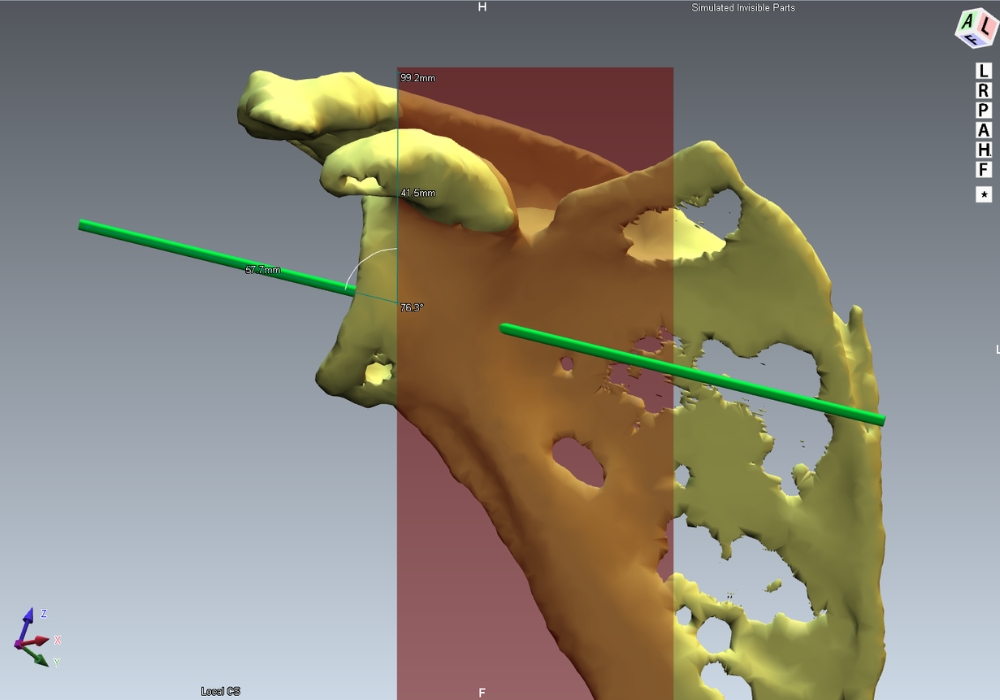
Successful shoulder replacement begins long before surgery. Accurate implant positioning is essential for restoring movement, stability and long-term implant durability.
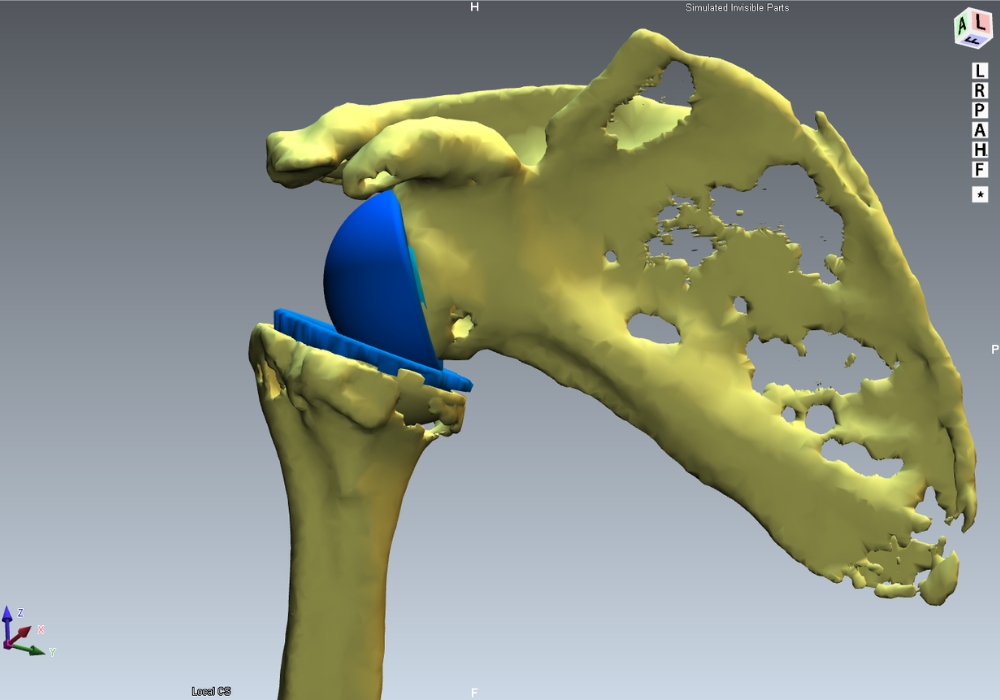
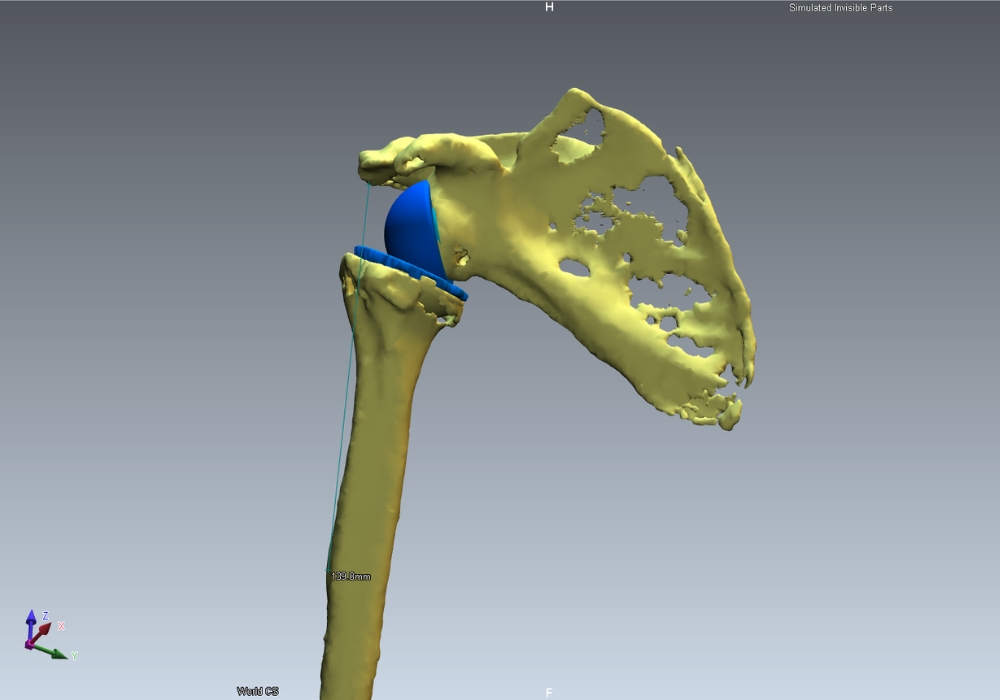
Three-dimensional imaging and virtual planning. X-ray, CT and MRI are used to create a detailed 3D model of the shoulder, allowing the procedure and implant position to be planned before surgery.
Navigation and customised implants. Intra-operative navigation is available when required to accurately reproduce the surgical plan. For patients with severe bone loss or complex anatomy, customised implants may be used to achieve the best possible fit.
The team. Successful outcomes also depend on an experienced multidisciplinary team, including specialist shoulder surgeons, theatre staff and physiotherapists involved throughout rehabilitation.



The Procedure
Shoulder replacement is performed under general anaesthesia and takes on average 60 to 90 minutes, depending on the type and complexity of the case. Most patients are discharged within 24 hours.
Before surgery, you will be told which type of arthroplasty is proposed for you and why. Pre-operative work-up includes blood tests, chest X-ray, ECG and cardiology clearance, together with the shoulder imaging used for planning – X-ray, CT and MRI. You will give a full medical history and receive instructions about any medication you take. Admission is on the day of surgery.
Recovery After Shoulder Replacement
The first two weeks are given to initial healing of the tissues and the wound. A simple sling is fitted for two to three weeks, and it does not need to be worn all day. You may move the shoulder in a controlled way without loading it or lifting weight, and you can use the arm immediately for most daily activities – eating, washing, dressing, typing, writing.
Physiotherapy begins two weeks after surgery, aimed at restoring range of movement and muscle strength, and follows three phases:
Phase 1: Passive movement (weeks 2–4).
The physiotherapist moves the shoulder without active effort from the patient, maintaining range of movement and preventing stiffness.
Phase 2: Active-assisted movement (weeks 5–8).
The patient participates actively with assistance, and range of movement is increased progressively. Return to light work is usually permitted during this phase.
Phase 3: Strengthening (week 9 onwards).
Resisted active exercise restores muscle strength.
Returning to activity. Driving is permitted after four to six weeks. Light manual work and lifting small weights are allowed after the first month. Sporting activities that do not involve the operated arm can be resumed early in recovery.
Results and Longevity
Shoulder replacement has a success rate of 90 to 95%, providing long-lasting pain relief together with significant improvements in shoulder movement, function and quality of life.
Modern implants are expected to last more than 20 years. For younger patients, implant choice is particularly important, and bone-preserving options such as stemless shoulder replacement may be considered where appropriate.
Risks and Complications
Shoulder replacement is a safe procedure with a low complication rate. Potential complications include infection, dislocation, implant loosening, nerve injury and periprosthetic fracture, although all are uncommon.
Choosing an experienced shoulder surgeon, together with appropriate rehabilitation and follow-up, helps minimise these risks.
Cost of Shoulder Replacement in Greece
The total cost has three components: hospital costs (theatre, room, nursing care, medication, length of stay), surgical fees (surgeon, assistants, anaesthetist), and the implant itself, which varies with the type of arthroplasty and whether customised components are needed.
With private or international insurance, the procedure is notified to your insurer and covered under your policy once pre-approval is granted. We can advise on what your insurer will require.
Paying privately, you receive a full breakdown before you commit to surgery.
Travelling from abroad? Allow for the pre-operative imaging and planning, which is more extensive for arthroplasty than for other shoulder procedures, and for early follow-up. We will set out the full picture, including how long to plan to stay in Athens, before you travel.
Contact us for a personalised estimate.
Book your appointment on 698 05 06 555
Contact usAbout Your Surgeon
Panagiotis Papadopoulos MD, MSc - Orthopaedic Surgeon, Sports Medicine
Deputy Director of the 3rd Orthopaedic Clinic at HYGEIA Hospital, with subspecialty training in shoulder and knee surgery, sports injuries and minimally invasive treatment. He consults at his private practice in Glyfada and at HYGEIA in Marousi.
Shoulder Replacement in Glyfada and Marousi
Whether you live in Athens, are working here on assignment, or are travelling to Greece for treatment, consultations and follow-up are conducted in English throughout.
Private Practice - Glyfada 4 Leoforos Dimarchou Angelou Metaxa, 3rd floor, Glyfada 166 75, Athens
3rd Orthopaedic Clinic, HYGEIA Hospital - Marousi 5 Erythrou Stavrou, 5th floor, Marousi 151 23, Athens
Telephone: 210 89 49 727 Mobile: 6980 506 555 Email: info@arthrojoint.gr
If you are contacting us from outside Greece, send your imaging reports and a short description of your symptoms by email and we will advise on the next step.
Frequently Asked Questions
How long does shoulder replacement surgery take?
On average 60 to 90 minutes, depending on the type and complexity of the procedure.
How long will I be in hospital?
Most patients are discharged within 24 hours.
What is the difference between a reverse and a total shoulder replacement?
An anatomic total replacement reproduces the natural configuration of the joint and depends on the rotator cuff working well. A reverse replacement inverts that configuration so the deltoid takes over the cuff's role, which makes it the right choice when the cuff is irreparably damaged.
How long will the implant last?
Modern implants are expected to last more than twenty years.
When can I drive again?
After four to six weeks.
When can I go back to work?
Light work is usually possible during weeks five to eight. Light manual work and lifting small weights are permitted after the first month; heavier physical work takes longer.
Will I be able to use my arm straight away?
Yes, for most everyday activities — eating, washing, dressing, writing, typing — within the limits of not loading the arm or lifting weight.
Am I too young for a shoulder replacement?
Age is one factor among several, and it influences the choice of implant more than the decision itself. Stemless implants, which preserve bone for a future revision, are often considered in younger patients. This is a conversation to have at consultation.
